

Make the most out of you photo workshop
If you have signed up for a photo workshop, you’re probably looking forward to attending and returning with a wealth of new photography knowledge and some captivating images. Completing a few simple tasks before you leave can significantly increase your enjoyment of the workshop as well as the amount of knowledge, skills, and great captures you’ll bring back.
This guide will help you get ready for a photography workshop. Following these crucial trip planning tips will ensure that you have all of the necessary equipment and supplies, as well as information on the best places to take photos and how to use natural light. Assuming your passport and visa are valid, your lodgings and tickets are confirmed, and you have adequate equipment, medical, travel, and trip cancellation insurance, let’s get started.
To make the most of how to squeeze maximum value and ensure that you can have an enjoyable and fulfilling experience, have a read of my 7 tips to get the most out of your photo workshop. In part 1 we look at the first 2 tips.
1 - Check Your Equipment, know your gear
It is fundamental to carefully check each piece of equipment you intend to bring to the photography workshop to ensure it is fully functional. You will almost certainly miss important shots if you spend time in the field fumbling with camera settings, and you won’t be able to concentrate on developing your photography. Spend some time getting familiar with your camera(s) and experimenting with various camera settings because we’ll likely use most, if not all, of these skills. You should be able to:
- In manual mode, set the aperture, shutter speed, and ISO values and experiment with the dials.
- Set the Aperture Priority and Shutter Priority modes, as well as the ability to change exposure compensation.
- Move the focus point around the viewfinder and live view and how to reduce the number of focus points from multiple to one.
- Switch from single shot to continuous focusing, and from autofocus to manual focusing.
- Operate live view and display the histogram (if the camera has one) or exposure metering.
- In live view, show the electronic level/virtual horizon and gridlines.
- During image rereview, the RGB histogram is displayed.
- Turn on focus peaking for mirrorless cameras.
- Find and set Auto ISO settings and options.
- Set a 2, 5, or 10-second self-timer to reduce camera shake. If you don’t have a remote trigger.
- Enable auto-bracketing for 2 or 3 exposures, with full and third-stop increments.
- Use the live view function on DSLR cameras to quickly zoom in for precise focusing. If you only use live view, be sure to practise using the viewfinder as well.
- Be familiar with these settings so you can perform them all in the dark. We frequently shoot during hours when it is dark.
- Make sure to set the date and time of your cameras to local time.
- Set your camera so it will only fire with a memory card in the slot. You never know when you might forget to put the card back in the camera, and the last thing you want is to find out later that all those captures you created weren’t saved.

Equipment & clothing test, clean and pack wisely.
Is your equipment clean and safe? Is it in need of maintenance, including checking sensor cleanliness? Do you have enough good-performing batteries, are they charged? Ideally, you should create a packing list for your trip. You don’t want to leave the house without your medication or other necessities.
Practice, as with most things, makes perfect. Making your plans for outings makes a lot of sense. Allowing you to become more acquainted with your camera settings, we frequently need to rely on ‘muscle memory’ when out in the field dealing with a variety of variable lighting and weather conditions.
If you are unable to find time to go on location, you can run through your set-up at home with your equipment on your tripod and double-check that everything is working properly. A small tool kit, including Allen keys, spanners, and watchmakers’ screwdrivers, is considered necessary.
Equipment list
Camera
A DSLR or Mirrorless camera.
Spare batteries and backup chargers and cables.
Spare media cards formatted in the camera. Check they are working.
Rain Cover or waterproof bag
Make sure your sensors are clean. Bring an air blower and microfibre cloth.
Lens
Select the Metadata tab under Library filters in Adobe Lightroom, to understand which focal lengths you use frequently. On many occasions taking more than 3 lenses may be ill-advised.
Wide angle lens – fixed focal length prime or zoom of 24mm – 70mm.
Telephoto lenses – fixed focal length or zoom of 100mm – 500mm. 1.4 x extender. Lens cleaning kit complete with
Make sure your lenses are clean. Pack your gear so that your go-to lens is handy and ready to go. Consider storing that lens on the camera body.
Filters
I don’t use a lot of filters, but a circular polarizer (for cutting reflections) and a few soft / hard grads and ND filters (for long exposures) are always in my kit. For ND filters, I bring a 3- or 6-stop, and a 10-stop. I love Kase filters.
Computer
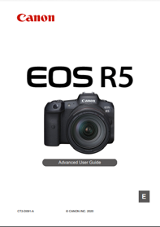
Laptop or tablet with your camera manual uploaded. Your instructor may not be familiar with your model.
Download your Camera Manual.
Check your built-in card reader is working. For safety pack a backup card reader.
Make sure your laptop operating system software is updated.
Update Lightroom Classic and Adobe Photoshop. Make sure you log out of Adobe and log back in, before leaving, so that your versions are good for offline use for 30 days. Do the same with any other software you use for processing.
In case you lose your passport or driver’s license have a backup of all your important documents. This may be a lifesaver.
External hard drive or storage device. Optional—but helps especially on longer trips. Your laptop typically doesn’t have enough space to store all of your files.
Bring a travel adapter and power strip. A travel extension cord can be handy, too. Hotel rooms don’t always have enough outlets.
Accessories
Tripod and head.
Release cable or remote.
A groundsheet or large black bin liner.
A headlamp. For night photography. It must have both red and white lights and be dimmable. I recommend one like this.
Leatherman or RRS multi-tool. Make sure you don’t carry it on the plane!
Batteries
Spare batteries and chargers are essential.
Pack all of your lithium batteries in your carry-on bag, so that you are complying with flight regulations. Consider using Lipo Safe Bags.
A battery bank for mobile phones.
Make sure you have the right gear. Do not bring too much. Keep it simple.
2 Maintain comfort.
Try on your clothes and ensure that your clothing and accessories are comfortable, fully functional and can be properly secured. Walking boots and indoor shoes should be broken in to ensure a comfortable fit. Spend two minutes reading this foot care guide.
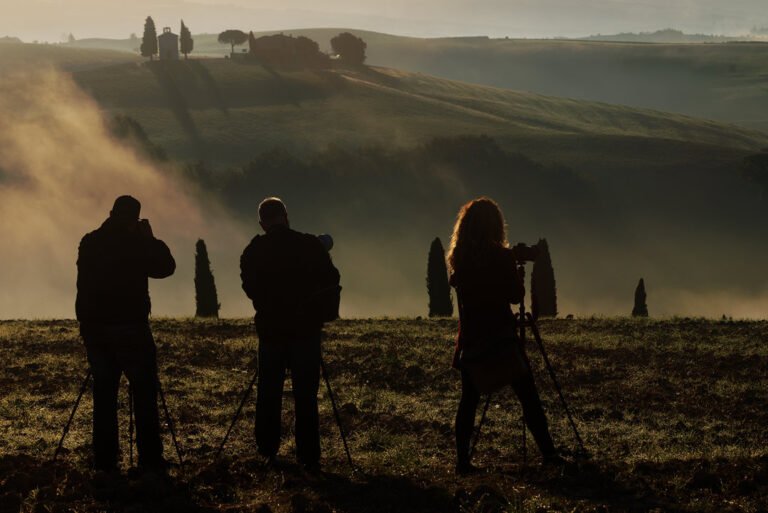
Photography sessions take place throughout sunrise and sunset, so dress warmly against the cool wind and any rain. Consider following the three-layer rule.
I don’t travel anywhere without at least a light rain jacket, a beanie, a neck gaiter, and gloves for cold weather (especially cold nights!). For photography gloves, I am a fan of Vallerret.
Sunglasses and a peaked cap will help to ward off the sun and helps you to see the camera LCD. An umbrella, sunscreen, mosquito repellent and plastic rubbish bags are also recommended.
You may also benefit from knee pads So you can comfortably get down low and trekking poles for added stability.
Pack all prescription medication, supplements, and eyeglasses/contacts in your carry-on bag. Bring along a supply of over-the-counter medicines that you might need such as cold medicine, antihistamine, anti-diarrheal medicine, antacids, pain relievers, and similar products.
Pack in soft-sided luggage. It packs into vehicles better than hard plastic luggage.
In the next episode, we will investigate how to research and plan ahead and identify the best ways of establishing and obtaining goals for the workshop.
Until then enjoy every aspect of your photography.
Subscribe to my newsletter
Be the first to find out about new photography workshops, articles and special offers!
Get the full 7 tips to get the most out of your workshop in one free PDF by subscribing to my newsletter.
You can unsubscribe at anytime.


2 Responses
Everything is very open with a precise description of the issues. It was really informative. Your website is very helpful. Many thanks for sharing!
Thank you kindly for your comments, appreciated. More articles will be coming soon.