 Skip to content
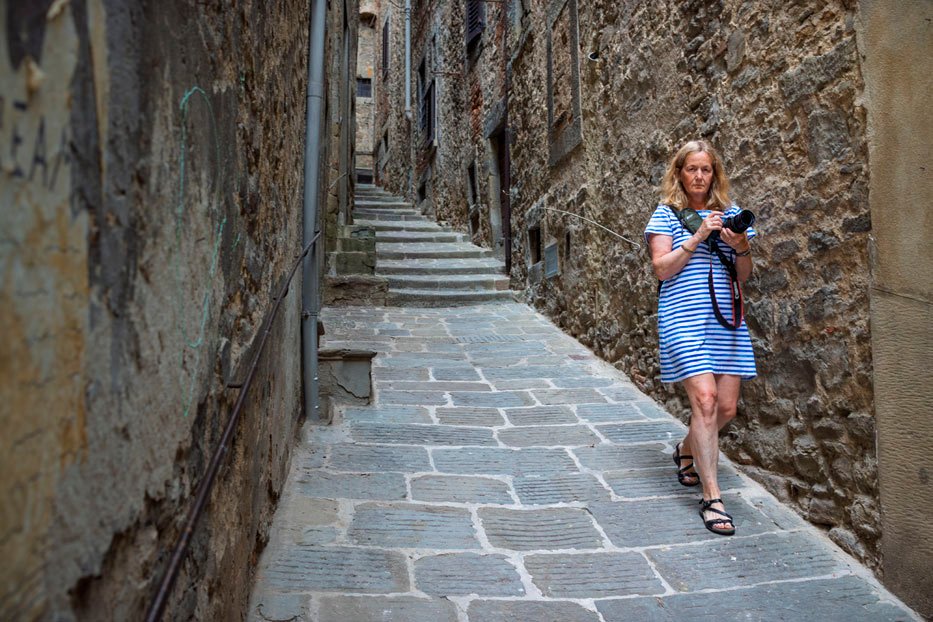
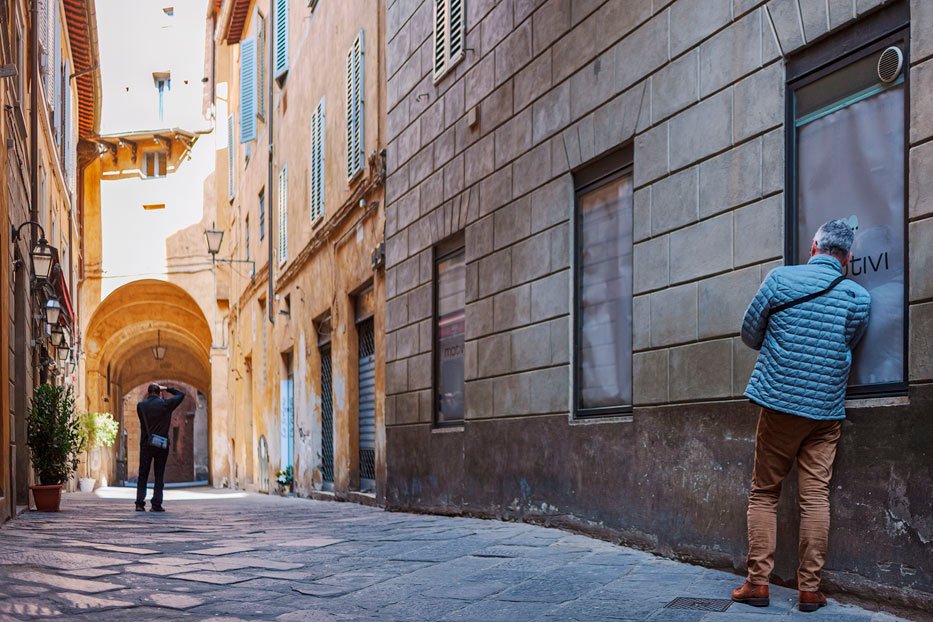
Siena is a city of high contrast and deep history. As we navigate the narrow chiassi (alleys) and the burnt-sienna facades of the Piazza del Campo, we will focus on urban geometry and street photography. We’ll learn to work with the dramatic shadows cast by medieval towers and find the human stories hidden in the bustling markets. This walk is about seeing the 'Invisible Siena' through the lens of a local.
We focus on refining vision — understanding what draws your attention, how you organise the frame, and how your way of seeing translates into your photographs.
Locations remain flexible, from the quiet structure of historic towns to the openness of the Tuscan landscape, allowing the experience to respond to both light and intention.
From the geometry of Piazza del Campo to the interplay of shadow and light in its narrow streets, Siena presents opportunities to explore composition in a more structured and layered way.
This experience focuses on simplifying complexity — identifying strong elements, organising the frame, and working with contrast to create clarity and impact.
We move through the city at a measured pace, responding to light and space as it shifts throughout the day.
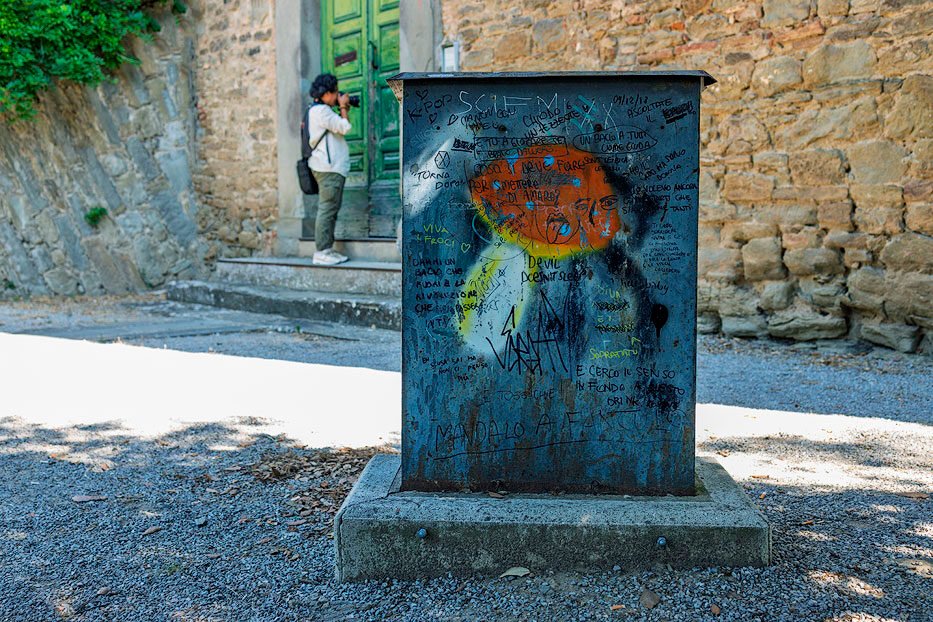
Cortona rises gently along the hillside, a place where the streets tilt toward the sky and the views open wide across the Valdichiana. It’s a town shaped by Etruscan stone, medieval walls, and long, sloping lanes that invite you to move slowly and look carefully. The rhythm here is different — quieter, elevated, spacious — perfect for exploring photography with intention.
This Slow Photography Tour begins in the historic centre, where warm stone façades, narrow passages, and soft stairways create a natural flow for unhurried wandering. We follow the light as it moves through the town: a sunlit archway, a shadow stretching across a steep street, a glimpse of the valley framed between buildings. Nothing is rushed. We explore photography through presence, curiosity, and the gentle pace of the hillside.
Cortona is ideal for slow photography. Its vertical lines and layered streets teach you to work with perspective, depth, and the subtle balance between light and shadow. As we walk, you begin to see how the town shapes your attention — a doorway glowing in late afternoon light, a quiet terrace overlooking the valley, a curve of wall catching the warmth of the sun. Photography becomes less about technique and more about responding to the place with clarity and calm.
Cortona has its own quiet pulse. In summer, the golden light lingers on the stone; in autumn, the town feels intimate and reflective; in winter, the air is crisp and the views stretch endlessly. Each season offers a different way of seeing, and each rewards anyone willing to walk slowly and look closely.
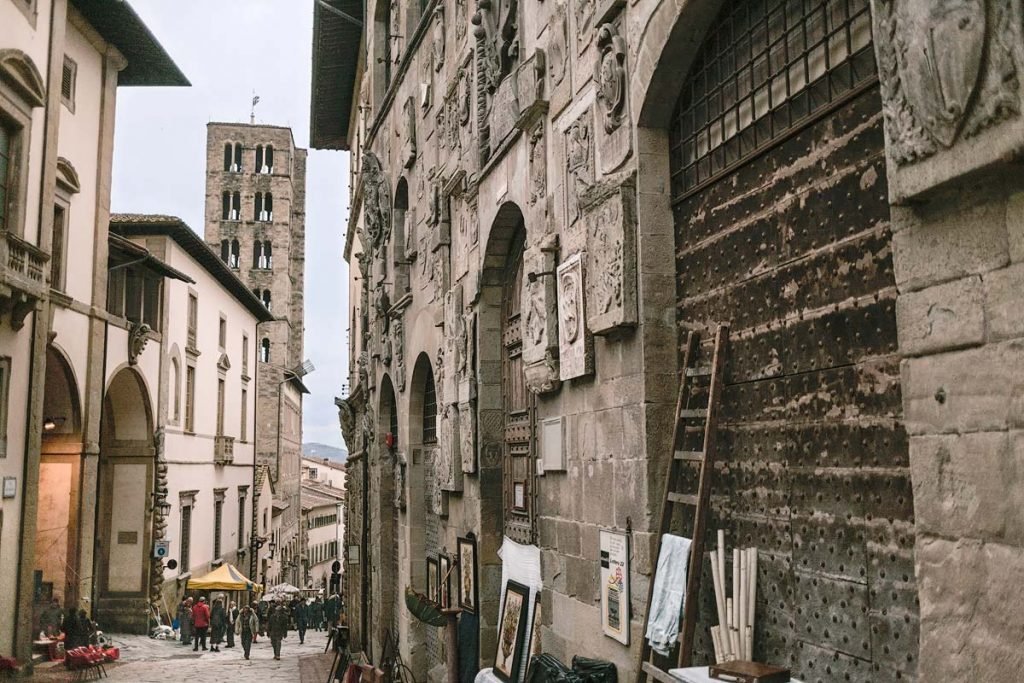
Arezzo is a city that reveals itself in layers. Medieval stone, Renaissance lines, hidden courtyards, long sloping streets, and a light that shifts beautifully across the old town. It’s a place where history feels close, but never overwhelming — a city that rewards anyone willing to move slowly, look carefully, and let the details come forward in their own time.
This Slow Photography Tour begins in the heart of the historic centre, where the streets rise gently toward Piazza Grande, one of the most atmospheric squares in Tuscany. We wander through narrow lanes, quiet stairways, and open terraces, exploring photography through curiosity, presence, and the rhythm of the city. Nothing is rushed. We follow the light, the architecture, and whatever draws your attention.
Arezzo is ideal for slow photography. Its geometry is a mix of strong lines and soft textures — Romanesque arches, stone façades, angled streets, and sudden pockets of shadow. These elements teach you to compose with intention, to work with contrast, and to understand how light shapes space. As we walk, you begin to see how the city guides your eye: a doorway catching morning light, a quiet corner framed by stone, a long street pulling you into the distance.
Arezzo has its own quiet pulse. On the first Sunday of each month, the Antiques Market fills the streets with colour and texture — a dream for photographers. During the Giostra del Saracino, the city becomes a living medieval stage. But even on ordinary days, Arezzo offers a calm, grounded beauty that suits slow photography perfectly.
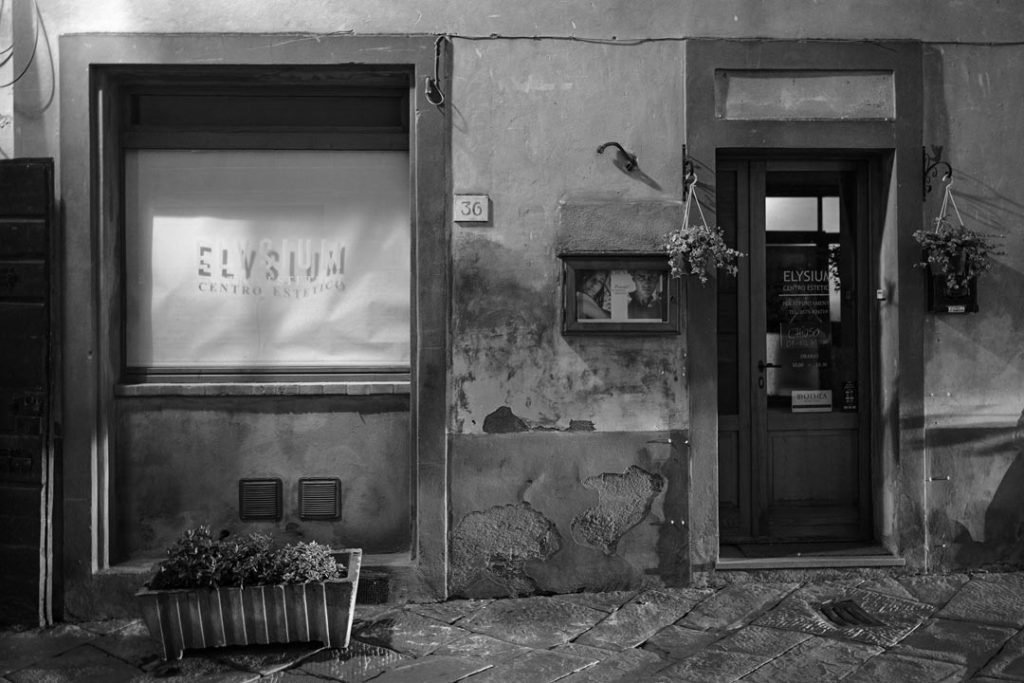
Lucignano is a place that changes the way you move. Built as a double‑walled figure of eight, its medieval streets rise in soft spirals, looping you gently through warm stone, arches, and small pockets of light. It’s one of I Borghi più Belli d’Italia, but it never rushes to show itself. Instead, it invites you to slow down, look closely, and let your attention settle.
This tour is built around that rhythm. It’s not about covering ground — it’s about exploring photography slowly, through curiosity, presence, and the simple act of walking without hurry. We follow the natural flow of the village, letting the light guide us: a doorway glowing gold, a curve of wall catching shadow, a quiet opening onto the Valdichiana.
Lucignano rewards this kind of seeing. Its circular geometry creates a natural pause, a gentle return, a chance to notice what you missed the first time. Photography becomes less about “taking pictures” and more about understanding what draws your eye and how to shape that into an image that feels intentional and alive.
In May, the Maggiolata fills the streets with flowers and music, but even in the quiet months, Lucignano holds a gentle, timeless beauty. It’s the perfect setting for slow photography — a place where light, stone, and stillness come together in a way that encourages you to look, breathe, and notice more.